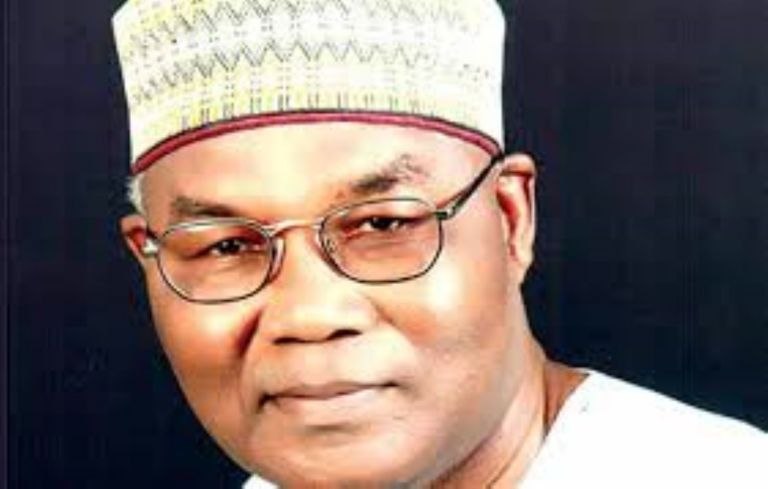
Dr. Bukar Usman
Author
Dr. Haruna Penni
Book reviewer
Author: Dr. Bukar Usman OON, D.Litt, M.CloD, Hon. FNAL, Noble Patron of the Arts
Pagination: 341
Publishers: Klamidas Communications Ltd, Abuja
Genre: Autobiography
Print Type: Hard & Paperbacks
Publication Date: 2006
Reviewer: Dr. Haruna Penni fANA, FIMC, FIPA
1. Introduction
Dr. Bukar Usman’s career in the Nigeria federal civil service as Director-General and Permanent Secretary is a chronicle of dedication and untainted public service. On his retirement in 1999 however, he fully strode onto the literary landscape, drawing from ideas he documented while is service which proved useful guide and source of reliable information on government operations. No doubt, he is the most prolific writer among retired federal civil servants having so far authored and published well over forty books which he gives out freely.
It is believed that his debut work, Voices in a Choir: Issues in Democratisation and National Stability in Nigeria proved his profound experience in public administration and the inner workings of government machinery. It was published and presented at the International Conference Centre Abuja on the eve of his retirement in 1999. The work which laid a foundation for a literary voice is a collection of his public papers presented. They are rooted in deep experience and authoritative insight, having wrote most of them under the weight of policy and protocol.
It was upon his retirement that, Dr. Usman intensified effort at completing his autobiography – Hatching Hopes which he started writing way back in 1992. It was eventually published and presented along with his four other literary works at the Yar’adua Conference Centre Abuja in 2006. From that year onward, he embraced the convergence of public and cultural advocacy with each informing the other. It was a conscious turn to the world of letters and tradition. The stories of the young minds, the cadence of folklore, and the pulse of indigenous culture which had been in retreat, was now awakened through his efforts.
Apart from his works on public administration and Biu, he has a huge collection of folklores from all regions of Nigeria, several novels and children’s literature. He was able to weave his life experiences and cultural heritage into stories thereby ensuring cultural preservation and education across generations. Leaving the civil service, has given him the opportunity to masterfully balance this vibrant literary gift with his roles as a philanthropist and the President of the Nigerian Folklore Society. And whenever the government or any of its agencies invites him, he responds and selflessly renders service as if he were still a state functionary.
Today, Dr. Usman has gained national and international fame and earned recognitions for his tireless promotion of Nigerian folklore and public enlightenment: he exhumed, compiled and published the Biu chronicle. He is a foremost folklore revivalist in Nigeria, in addition to his engagement in philanthropy and humanitarianism, as well as Hausa language development. This achievement is no accident. It is based on his belief in the promotion of culture and education which he sees as fundamental right of the citizens: a carry-over from his role in The Presidency. So, to truly understand his impact, one must be familiar with his antecedents as narrated in his autobiography.
A towering figure in Nigerian literature, Dr. Usman’s autobiography offers a profoundly deep explanation on the direction of Nigerian identity, culture and history while extensively anchoring himself as the epic center of its tradition, modernity and social commentary, thus creating a rich tapestry that resonates deeply with readers. In Hatching Hopes he reveals his hopes and aspirations for himself and for Nigeria with a philosophical underpinning that evaluates his understanding of and contribution to the progress of Nigeria.
And so, over the years, Dr. Usman’s life and times have gradually unfolded into what may aptly be described as an open text—accessible, layered, and instructive. Before then both his intelligence connection and career trajectory remained subjects of guarded discourse. But after retirement, multiple categories of exposures have emerged through biographical sketches, profiles, books, articles, public lectures, commentaries, festschrift, interviews, institutional citations and his autobiography They collectively illuminate his public and intellectual life.
Yet, as Strachey (1827) famously observed, autobiography remains “the most delicate and humane of all branches of the art of writing.” This assertion underscores the significance of the genre under review. Biography and autobiography possess enduring appeal because they offer not merely chronicle of events but also structured interpretation of a life; packaging personality, vocation, conflict, ambition, and milieu into a narrative that carries the vitality of creative writing while remaining anchored in factual truth.
In this sense, autobiography requires the author to mould complex biographical materials (birth, education, career, family, conflict, accident, and social context) into a coherent narrative whole. Dr Usman’s attitude to autobiography reflects this understanding: one may write early in life or later, but in either case, such writing remains provisional, demanding periodic updating as life extends beyond earlier projections. There is little doubt that Dr. Usman was born into circumstances that predisposed him to distinction. His enviable record of serving peacefully under successive, often unstable regimes from independence until retirement after nearly three decades of public service is remarkable. For a civil servant who navigated Nigeria’s turbulent political epochs without public scandal or professional rupture, his career appears almost providential.
2. Scope, Theoretical Framework and Organisation of the Review
Reviewing Hatching Hopes, a book in which the author documented his fortunes and misfortunes up to his retirement with notable candour, 20 years after it was published tempts one to discuss what is not there. This is because his post-retirement life catapulted him into public prominence through his extensive contributions to arts, folklore, and literary bodies. These public activities have broadened and elevated his clout as a former security administrator committed to information dissemination and national cohesion.
Because this is a review of Hatching Hopes, and not a review of post-Hatching Hopes activities of Dr. Usman, one needs to resist the temptation to dwell on later events such as his philanthropy, professional recognitions, honorary fellowship of the Nigerian Academy of Letters, Pan-African Writers’ Association and Doctorate degree awards, presidency of the Nigerian Folklore Society as well as extensive book production and donation, international language exchange initiatives, cross-border literary development efforts, Golden INGOT activities, and an active commitment to the development of Biu community.
The sheer breadth of materials covering nearly six decades of lived experience renders the autobiography a formidable scholarly undertaking. The autobiographer probably employed a composite methodology anchored in personal recollection, likely supplemented by diaries and private records. Archival materials from specialized libraries -particularly within the Office of the Secretary to the Government of the Federation could have been consulted and interviews with contemporaries and key actors.
Oral history played a central role, especially in recollecting the history of his Biu hometown, lineage, and family ancestry. As a seasoned interlocutor, Dr. Usman also engaged Nigerians across social strata on the state of the nation. Despite his mastery of the matter, he subjected the manuscript to peer previews by eminent Nigerians, thereby enhancing its credibility.
The narrative is predominantly in first-person, an expected choice given the author’s direct involvement in the events recounted. He acknowledges numerous contributors, including Dr A.O.O. Ocheoha, Dr Inno Nwadike, Malam Bemi Biu, Senator M.G. Lawal, Mr Wale Akinpelu, Alhaji Shettima Abba, and Alhaji Bukar Gana.
Notably, the work omits a formal foreword, preface, or external endorsement, elements that might have enriched the text. Additionally, the narrative adopts a largely unidirectional first-person style, foregoing a polyphonic approach that might have incorporated dialogue, hedging, or alternative perspectives.
Structurally, the autobiography comprises twenty chapters spanning birth in Biu, educational sojourns, professional ascent, family life, and eventual retirement in Abuja. This review subsequently reorganises the narrative thematically into four analytical parts—Roots, Routes, Destination, and Personal—followed by sources, theoretical foundations, thematic organization, content analysis, critical evaluation, conclusion and recommendations.
Anchored in post-colonial theory, this review examines Nigerian colonial history and its enduring impact on Dr. Usman’s identity formation and cultural hybridity. It explores how he navigated multiple cultural influences while engaging in colonially inherited structures, policy frameworks and institutions to interrogate Nigerian politics, governance, and social organization.
The analysis further explores Dr. Usman’s valuation of Nigerian traditions and cultural norms, situating them within broader discourses on national identity and the pattern of imperialism. Also, it investigates how his dual identity as a writer and senior security bureaucrat shape his narrative voice and reflects prevailing power structures.
Of particular significance are his inter-tribal and cross-cultural affiliations—evident in his two marriages to Yoruba spouses of Christian faith, long residence in Lagos, and enduring friendships with colleagues from southern Nigeria dating back to his King’s College years in Lagos in the early 1960s.
The review further emphasizes Dr. Usman’s life as a case study in Nigerian hybridity. His identity is shaped by cross-cultural affiliations forged through education, marriage, sport, friendship, foreign official tours and vocations. Dr. Usman’s life demonstrates lived integration. This experiential nationalism contrasts sharply with contemporary tendencies toward ethno-regional retreat and political sectionalism.
Rather than functioning merely as a chronological life story, Dr. Usman’s autobiography is analytically grouped into four broad thematic segments: origins and cultural foundations; educational and social mobility; bureaucratic career and national service; and family life and personal values.
3. Bottom-line of Hatching Hopes
Dr. Usman’s autobiography explores his ancestral homeland of Biu, situated on a table plateau approximately 2500 feet above sea level, exhibiting ecological affinities with Jos. This geographical context is characterized by an intricate network of rivers, hills, forests, and fertile soils, which have historically shaped the settlement patterns, occupational pursuits, and agricultural practices of the indigenous population. The narrative foregrounds communal life, traditional medicine, folklore, and family structure, highlighting the formative influence of his parents—particularly his mother and, drawing on cultural heritage accounts from figures including Malam Bemi Biu his former headmaster and a colonial district officer of Biu Division, J.G. Davies.
He proceeds to recount his enrolment into primary school, wherein he was conscripted by the emirate palace guard in 1951, while undergoing Quranic studies. The author meticulously delineates the intersecting routes connecting Biu to major Nigerian cities, notably Maiduguri, Kano, Abuja, and Yola, with the Maiduguri-Damaturu-Buni-Biu Road emerging as his most frequented pathway.
Furthermore, Dr. Usman’s educational and professional trajectories were provided – from King’s College Lagos through Ahmadu Bello University Zaria to the Federal Civil Service, sporting excellence, leadership roles, and formative friendships which recur as motifs. Also documented are his steady rise within the civil service, his principled aversion to lobbying, and his immersion in Nigeria’s security and intelligence architecture.
Dr. Usman provides an ethnographic exploration of Biu’s cultural landscape, encompassing its arts, folklores, architectural styles, rites of passage (including circumcision), and the erstwhile influential institution of soothsayers. This narrative is juxtaposed with his educational sojourn at King’s College Lagos 1964-1965, where he was accompanied by a fellow-student and Borno native, Umara Amshi. They were however preceded by notable seniors: Amb. Ahmadu Yusufari, Prof. Kyari Tijjani, former Governor Mohammed Goni, Justice Madu Audu Biu at Borno Provincial Secondary School now Government College, Maiduguri.
His sporting exploits at Borno Provincial Secondary School, Maiduguri, King’s College Lagos and Ahmadu Bello University, Zaria, in various field and track events includes football, hockey, rugby, athletics, and table tennis, are testaments to his multifaceted personality. Dr. Usman’s friendships and associations span multiple spheres. This covers sports, education, and professional circles where he met notable individuals including former Governor Jim Nwobodo and Oba Funso Adeolu a.k.a Chief Eleyimi of the famous NTA drama series Village Headmaster, who were his game masters in King’s College while HRM Ebitimi-Emmanuel Banigo was a schoolmate. He met Dr. Tunji Olagunju at ABU and Amb. Baba Gana Kingibe at Borno Senior Primary School.
In the North Eastern Secondary Schools’ sports competition, Dr. Usman came to know of fellow sports men like Admiral Murtala Nyako, AIG Abdullahi Jika, former Governor Habu Jalingo or Abubakar Barde, Sen. Uba Ahmed and AIG Lawal Bawa. In primary school, his friends include: Salviya Kachalla, Ibrahim Mohammed, Bukar Malam Soroma, Aboku Malam Tasiwa, Ali Adamu, Umaru Balbiya nee Mohammed, Ali Habu and Chima Balbiya.
At secondary school in Maiduguri, his friends were: Dr. Fiama Diggira Mshelia, Ibrahim Alhaji nee Mohammed. At college, the friends were: HRM Ebitimi-Emmanuel Banigo, Prof. Osato Giwa-Osagie, Chief Dennis O. Odife. At ABU, Dr. Usman’s friends include Sadik Mohammed, Sen. Abu Ibrahim, Mohammed Imam Yahaya, former Governor Dahiru Mohammed, Buba Madaki, Suleman Audu, Justice Mohammed Mahmood, Justice Ali Eri, Justice Suleman Galadima, Owonuwa Malomo. He also had HAK (Hauwa) of WTC Maiduguri and Miss Hirku of Waka Secondary School Biu as platonic girlfriends.
In Lagos, he was first accommodated at the Legislative Council (LEGCO) flats Victoria Island, Lagos from 70-81 during which he neighbored former Governor Alh. Abubakar Rimi, Alh. Muhammad Arzika, former Vice-President Alh. Abubakar Atiku. After the residency in Victoria Island, he moved to Mulliner & Cameron Roads Ikoyi from 82-89. In the Mines and Power ministry, he worked with Crown Prince of Benin Solomon Akenzua, Dr. Russell A. Barau Dikko, Alh. Shettima Ali Monguno, Chief P.C Asiodu, Engr. M. O. Feyide, and Engr. F. R. A. Marinho.
Dr. Usman was inspired to choose the public service by Biu teachers, court personnel, tax collectors, constabulary police and prison officials. They had bicycles, mobylettes, scooters and saloon cars. His motivators also included respected public servants from his geographical axis. They include Alh. Shettima Ali Monguno, Sir Kashim Ibrahim and Sir Abubakar Tafawa Balewa. He also cited northern region civil servants who later opted for Federal Government of Nigeria (FGN) employment in Lagos: Chief Sunday B. Awoniyi, Alh. Mohammed Hayattudin, Alh. Bukar Shuaib, Alh. Yusuf Gobir, Alh. Tatari Ali, Alh. Liman Ciroma, Malam Adamu Ciroma, Alh. Muktari Tahir, Malam Galma, Alh. Ladan Zuru, Alh. Ibrahim Damcida, Alh. Ahmed Joda and Alh. Sule Katagum.
It was however in 1972 that he was posted from the Ministry of Mines and Power to the Cabinet Office, Security Division, later Special Services Office and worked with all the Secretaries to the Government of the Federation (SGFs) from Mr. Abdul-Azeez Atta in 1972 to Alh. Gidado Idris in 1999. He described the personal administrative styles of Abdul-Azeez Atta, Charles Olatunde Lawson, Alh. Shehu Musa, Chief Olu Falae, Malam Aliyu Mohammed, Alh. Aminu Saleh, Malam Gidado Idris. Mr. Gray Adetokumbo Eromose Longe, but omitted Mr. Allison Akenne Ayida, Alh. Mustafa Umara and Alh. Ali Liman Ciroma.
Dr. Usman highlights the several nomenclatures the Cabinet Office went through: Executive Office of the President, The Presidency, and Office of the Secretary to the Government of the Federation (OSGF); chronicling earlier Secretaries to the Federal Government as Mr. Felix Stanley Olabode Wey, and Mr. Harlen Anirejuritse Andrew Ejueyitchie. But he did not work with them on his posting to the OSGF. They had retired from service by then.
Based on his schedule of duty, Dr. Usman got involved in administratively managing (not to be confused with operative bodies) state security service, police intelligence, national security advisory office and defence intelligence community.
Dr. Usman says he became director-general in 1988 and later permanent secretary in 1997, noting that he saw the promotions coming from Gen. Ibrahim Badamasi Babangida (IBB), Chief Olu Falae, Amb. Baba Gana Kingibe and Malam Gidado Idris, based on their indirect positive remarks to him on his performance, loyalty, humbleness and human relations. Here he revealed his relationship with Kingibe, a classmate who became his boss unknown to people. He briefly discussed Abacha coup, noting that it was a compulsory agreement reached between the army and the interim Head of State Sir Ernest Shonekan.
Dr. Usman’s immediate bosses included Mr. S. B. Agodo, Alh. Saidu Muhammadu Gwarzo, Mr. Alfa Wali, Amb. Baba Gana Kingibe while having interacting relationships with, Mr. M. D. Yusuf, Mr. Muhammadu Gambo Jimeta, Mr. A. O. A. Adesuyi, and Mr. Umaru Shinkafi. Other distant bosses were all the National Security Advisers (NSAs) from Prof. Shehu Galadanchi, Maj.-Gen. Aliyu Mohammed, Brig. Haliru Akilu, Malam Ismaila M. Gwarzo to Maj.-Gen. Abdullahi Mohammed, Rear Admiral Babatunde Elegbede, Gen. M. C. Ali, Commodore E. Agbiti, Brig. I. D. Gumel, Mr A. K. Horsfall, Air Vice Marshal Idi Musa and Amb. Z. A. Ibrahim.
Dr. Usman’s story highlights his involvement in various national events and projects, including FESTAC 77, Abuja construction monitoring and movement, and the reorganization of Nigerian Security Organisation, National Intelligence Agency (NIA), aviation, trade fair, international organisations, Hajj operations, human rights, oil, agriculture and electricity sectors. He also had working visits to several countries in Europe, America and Asia.
His role in the civil service necessitated frequent interactions with various stakeholders, including Non-Governmental Organisations (NGOs), Civil Society Organisations (CSOs), media representatives, labour unions, finance experts, and academics. He noted that labour unions often opposed Government policies related to labour democratization, minimum wage, fuel price increases, staff downsizing, and foreign loans.
Dr. Usman interacted with notable labour leaders including: Prof. Eskor Toyo, Dr. Assisi Asobie, Prof. Dipo Fasina, Comrade Paschal Bafyau, Comrade Armstrong Ogbonna, Dr. Abdukadir Abdusalam, Barrister Solomon Onaghinon, Comrade Frank Kokori, and Comrade Adams Oshiomhole. These engagements provided him with valuable insights into the labour movement and its concerns.
He is also well-acquainted with media personalities, including Ray Ekpu, Ikenna Ndaguba, Raymond Dokpesi, Shyi